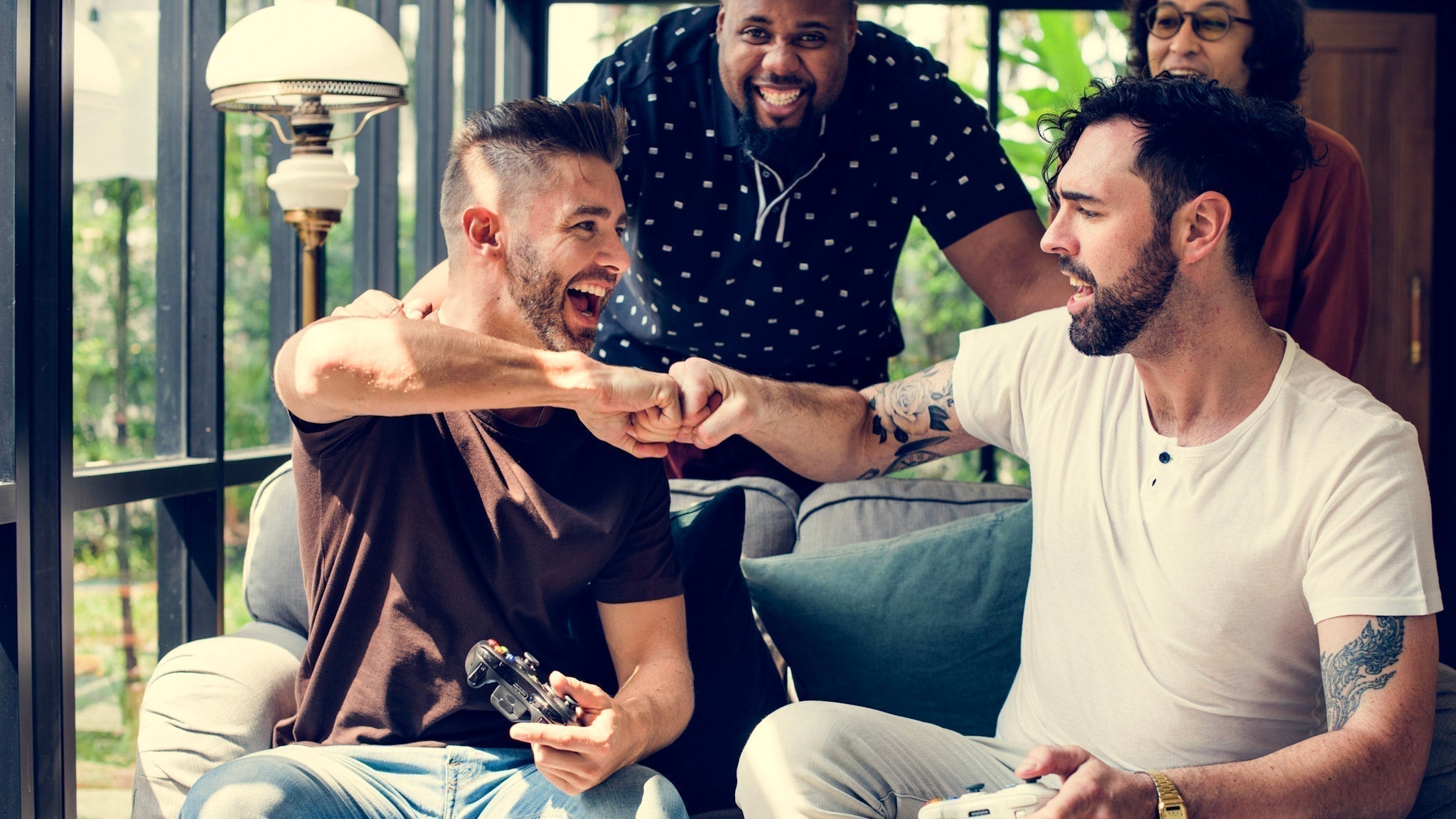

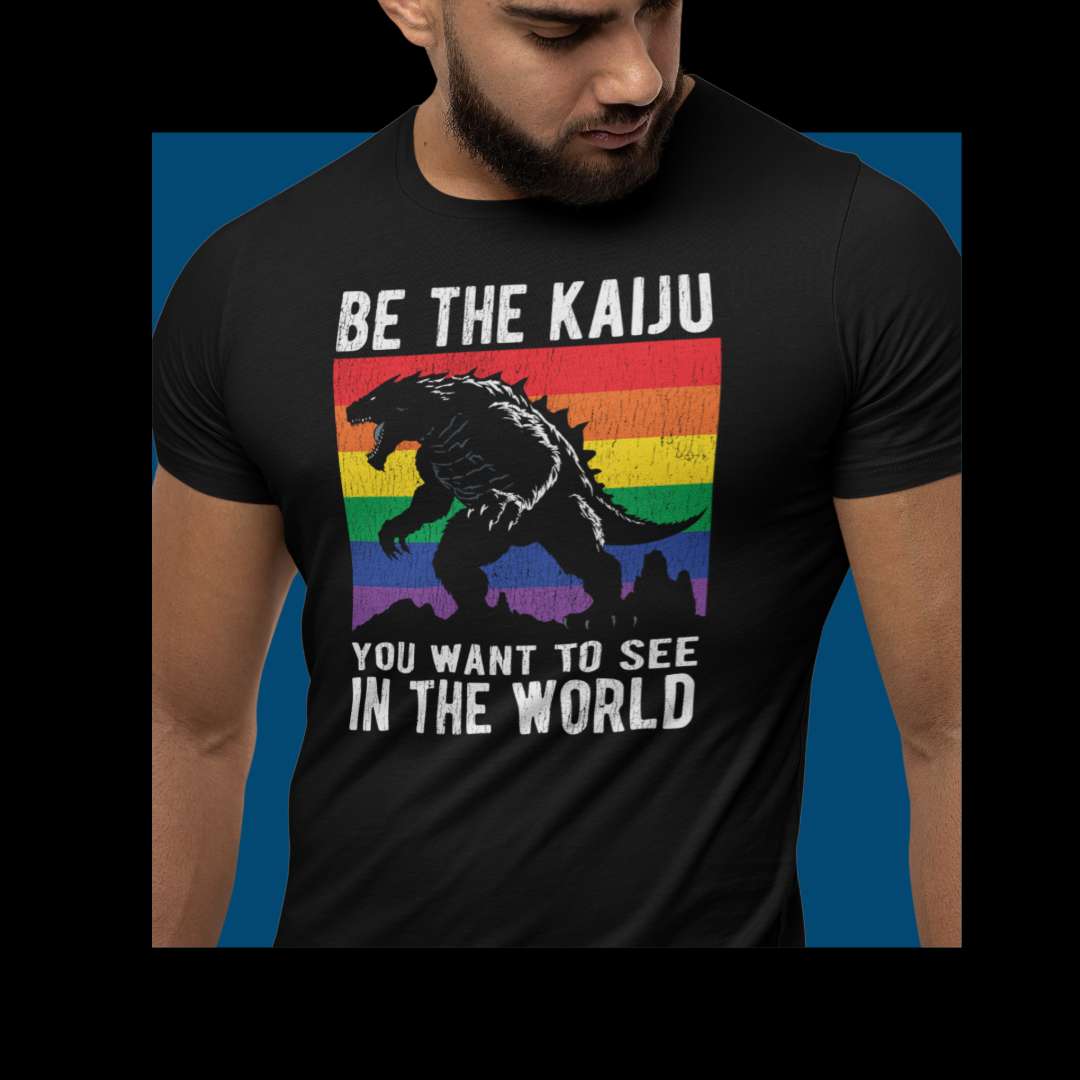


I am gay. I play video games. Does that make me a gaymer?
Feels like it should. Simple arithmetic. But hold the question there for a second, because the real answer carries more than those two facts added together, and the reason it does is a story worth telling.
I'll show my cards first. I'm a gaymer, and I've been one since before I had a word for it. Until recently I even worked in the video game industry, right up to the layoff that moved me to the other side of that door. Here's what surprised me in there. I walked in braced for the stereotype, a building full of guys who'd never once considered that the player fragging them online might be into men. Instead I found us everywhere. Quietly, casually, all over the place. Mostly younger than me, which tracked, but there, out, unbothered about it. And that's exactly what made the screen sting. Because if we're behind the games in those numbers, the near-total silence in front of them stops looking like an accident. It starts looking like a choice.
Featured product:
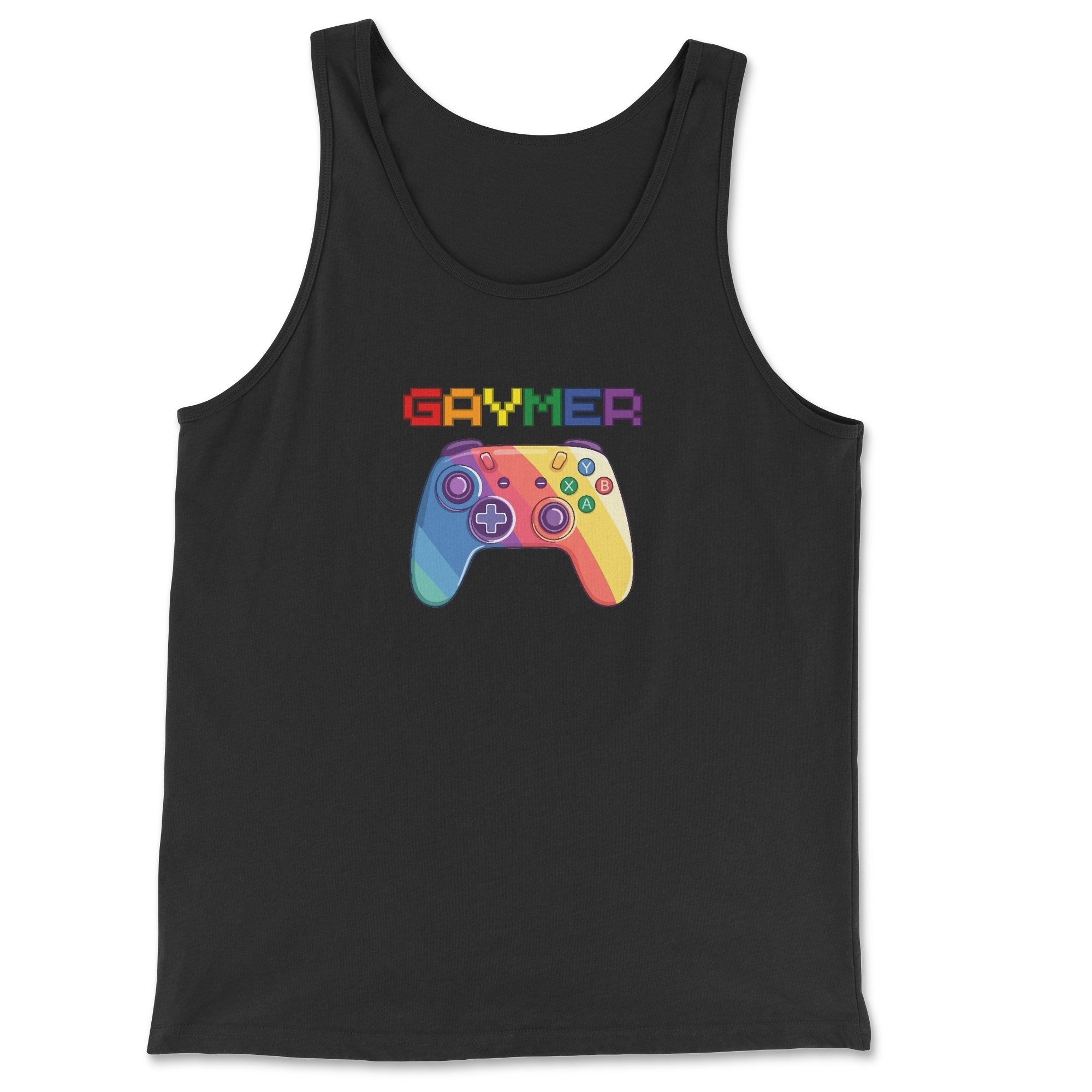
So back to the question at hand. A word like this one is a claim. People coined it, carried it, and went to the wall to keep it. Let me tell you where it came from, the year the community had to fight for it, and why the men who were there in 1991 and 2013 have first claim on it too.
What "gaymer" actually means
A gaymer is an LGBTQ+ person who games. The word gets used most often by gay men, and it carries more than the hobby. It signals community. When you call yourself a gaymer, you're saying more than "I play." You're saying you found your people inside a room that didn't come set up for you. It's identity and hobby folded into one four-letter pun, and the pun is doing more work than it looks.
That's the plain answer. Now the interesting part, which is how a joke in a personal ad became a word twenty-thousand people would organize around.
The 1991 personal ad
The earliest known use of "gaymer" shows up on April 20, 1991, in a personal ad on a Usenet newsgroup called alt.personals. Here it is, word for word:
Hey net.world, I am a 20 y.o. Gaymer (a gay role-playing enthusiast), and I am looking for others who share similar interests...I live in Southern Ohio, and would like to meet some people from there, but I would love to chat with any other gaymers out there... Mezzkareldin
Now look at the subject line he filed it under: "20 y.o. G(aymer)WM seeking others." GWM was the standard personals shorthand of the era, Gay White Male, the code you scanned the back pages for. He pried it apart and wedged "aymer" into the middle, so the word arrived as a pun tucked inside an abbreviation gay men already used to find each other. The parenthetical in the body, "(a gay role-playing enthusiast)," is him glossing it in real time for anyone who hadn't seen it before. And he writes "gaymers," plural, a line later, like the category already existed and he was just calling into it.
If you came up after the web was already everywhere, I need to set that scene, because it's easy to miss how brave it was. There was no web yet, not really. No apps, no profiles, no swiping. Usenet was text, a giant bulletin board you posted into and then waited, hoping the right stranger was reading. Coming out on it meant typing who you were into a public channel and sending it into the dark. That man was raising a hand in a room he couldn't see the edges of, hoping one other person would raise theirs back.
Do the math on Mezzkareldin and it stops you cold. Twenty years old in the spring of 1991 puts him at about 55 today. He's one of us, an elder of this tribe, and odds are he's still out there somewhere, in Southern Ohio or wherever the years carried him. I think about him more than I expected to. Did he get a reply? Did he find the others he was calling for, or did he end up building them himself? He typed a word into a text terminal to explain who he was, hoping it would reach one other person. It reached a lot more than that. I hope somebody's told him.
That's the birth certificate of the word. A gay guy who liked games, looking for his people, decades before anyone would put it on a shirt.
Why gay men needed their own word for it
You might be wondering why we needed a separate word at all. A gamer is a gamer, right? Back in the nineties and two-thousands, the label came with fine print.
Gaming culture back then ran on a hard heteronormative default, and honestly that's the polite version. The uglier truth is that "gay" and the f-word were the house insults in every online lobby, the thing you got called for missing a shot or picking the wrong character. Homophobia was baked in as the ambient noise of the whole culture, the stuff that filled the air between rounds while nobody so much as flinched. So you learned fast that your headset was its own little closet. You could be as out as you wanted at home and still go dead quiet the second the mic went hot, because you knew exactly what came back the moment your voice or your username gave you away. "Gaymer" was the word for the guys living in that gap. Fully themselves offline, carefully generic online.
The women in those lobbies were in the blast radius too. The same machine that made a lobby unsafe for a gay guy made it unsafe for them, and they got talked over, harassed off the mic, and hounded out of the hobby the second a room clocked them as female. That's the same reflex, pointed at a different target. Gaming culture spent decades policing one narrow idea of who counted as a real player, and everyone standing outside that box, queer, female, or both, paid the toll. Calling yourself a gaymer was a small refusal to vanish inside all that.
There's hard data behind this. Back in 2006, a gay gamer named Jason Rockwood ran the first big community survey, and more than ten thousand people answered. The numbers put hard proof under what everybody already felt: nearly 88% had heard "that's so gay" used as an insult in games, and only 7% reported running into no homophobia at all. We were there in real numbers, most of us had been harassed for it, and we were quietly building our own spaces to get away from the ambient hostility. The word just gave a name to a community that had been hiding in plain sight the whole time.
2013: the year the community had to fight for the word
Here's where it stops being a cute etymology and turns into something worth being proud of.
The cease-and-desist
In 2006 a blogger named Chris Vizzini started a site called gaymer.org. Fine, good, another room for us. Then in 2007 he filed to trademark the word "gaymer," and in 2008 he got it. And in 2012 he started enforcing it, sending a cease-and-desist to Reddit's r/gaymers and telling a community of gay gamers to stop calling themselves the thing they'd been calling themselves since before that site existed.
Sit with how that feels. A word born in a 1991 personal ad, carried for two decades by guys who needed it, and now a legal letter arrives saying one person owns it and the rest of us have to stop.
The EFF steps in
The community did not stop. On January 24, 2013, members of r/gaymers, backed by the Electronic Frontier Foundation and pro bono lawyers from the firm Perkins Coie, filed a petition with the US Patent and Trademark Office to cancel the trademark. The argument was simple and it was true: "gaymer" was a generic community term, in shared use since the mid-nineties, and no one person got to fence it off.
And they won. Faced with the petition, Vizzini surrendered the mark, and on August 22, 2013, the trademark office officially cancelled it. The word went back to where it started, which is to say it went back to us.
I want to be honest about the scale here. On paper it was a small thing, a trademark squabble and nothing grander. The meaning of it, though, runs deep. A man who's 45 today was in his early thirties when this happened, already online, already out, watching a community he belonged to refuse to let a word be taken from it. And the community held. That's the part that gets filed away as trivia. For the guys who were there, it was the year we proved the word wasn't for sale.
GaymerX and the rooms we built ourselves
Notice what the community did the same year it was fighting that letter. It threw a party.
On August 3 and 4, 2013, GaymerX opened in San Francisco, the first convention built specifically for LGBTQ+ gamers. Same summer as the cancellation. One hand fighting for the word in a government filing, the other hand renting a hall and printing badges. That's so on brand for our people it makes me grin.
And it didn't come from nowhere. The line runs from those nineties Usenet posts, through Yahoo Groups, through local crews like the Houston Gaymers, who've been organizing in person since 2009, to GaymerX, to today's Discord servers where tens of thousands of us hang out. That arc, finding your people inside a hobby that didn't expect you and then building the room yourselves, is the same story I told in Castro Clones: The Look That Built a Movement. Different decade, different uniform, exact same instinct. When the world doesn't hand us a room, we build one and put a door on it ourselves.
Are we still gaymers in 2026?
Now the honest question.
Does the word still do any work? Because a lot has changed. GLAAD's 2024 gaming report found that around 17% of active gamers are LGBTQ, up from roughly 10% in a 2020 Nielsen survey. Nearly one in five. That's a serious slice of the whole audience, out in the open now. Some younger gamers have quietly retired "gaymer" for exactly that reason. If being queer and gaming is barely worth remarking on, why do you need a special badge for it? Fair question. I'm not going to pretend it isn't.
But here's the other half, and it's the half I felt walking through that games studio. That same GLAAD report found fewer than 2% of games actually include LGBTQ content. Read those two numbers together. Nearly a fifth of the players, less than a fiftieth of the stories. We are in the building, we are making the games, and we are still barely on the screen. When the gap between who's playing and who gets seen is that wide, an identity word is not outdated. It's a flag someone should keep planted.
So here's where I land. When I was younger, "gaymer" was a shield. It was the word that found you the two or three other guys who wouldn't turn on you when your voice cracked over the mic. In 2026 it's shifting from a shield into a flag, from "please let me find my people safely" into "yeah, we're here, catch up." Honestly? That's the better problem to have. I'll take flag over shield every single time. But you don't retire the word the day the fight eases up. You keep it around for the guy who's still stuck at shield.
Frequently asked questions
Is "gaymer" offensive? No. Gaymer is a self-chosen community term. LGBTQ+ gamers coined it and carried it themselves, and a word that grows up inside a community tends to sit warm on the people who use it. Like any identity word, it lands best when someone uses it about their own community. Some younger players find it a little dated, which is a question of taste more than anything else.
Is "gaymer" only for gay men? It's used most often by gay men, and that's where the word grew up, but it covers LGBTQ+ gamers broadly. Plenty of queer women, bi, trans, and nonbinary players claim it too. Think of it as a wide door.
Who invented the word "gaymer"? No single person owns it, which is kind of the whole point. The earliest known use is an April 20, 1991 personal ad on the Usenet newsgroup alt.personals, from a self-described "gay role-playing enthusiast." A blogger did trademark it in 2008, but the community got that trademark cancelled in 2013, and the word went back to everyone.
What is GaymerX? GaymerX is the first convention created specifically for LGBTQ+ gamers, which opened in San Francisco on August 3 and 4, 2013. It grew out of years of smaller LGBTQ+ gaming groups and helped turn a scattered online community into an in-person one.
I've told you my side of this, the studio full of us that the screen never shows, the word I've carried since before I could name it. Now I want yours. Were you a gaymer before there was a word for it? Tell me your first online room. The Usenet group, the Yahoo group, the guild, the clan, the Discord. Where did you first find your people inside a game? I read the comments, and I'd love to know where you started.
Stay Hunky.