




Think about the gay men in your life. The ones you'd actually call a friend. Not the guy you dated in 2003 who you're still friendly with. Not the one from the app whose texts definitely crossed a line. Not the acquaintance from a bar you haven't been to since Obama's first term. I mean actual gay male friends. The kind you text when something happens and you need to talk to someone who just gets it.
If you're over 40, that list is probably shorter than you expected by now. And if you've ever felt like you should have figured this out by now, like by your age the community should have coalesced into something more tangible, you're not alone. You're not defective. And you're not the only one who noticed.
What our generation doesn't say out loud
Most gay men's closest friends are straight women. That's not a complaint. Straight women have shown up for gay men with a brand of loyalty that deserves its own monument. But there's a pattern underneath it worth naming: for men in our generation, the gay community was often something we experienced in the abstract, at a parade, in a show, in the shorthand of shared references. Less often in the form of an actual person we could call on a Tuesday night.
Research backs this up. A study published in the Journal of Homosexuality found that more than 60 percent of gay and bisexual men reported feeling lonely in the past week. Not occasionally, not sometimes. In the past week. And a 2025 systematic review covering 72 studies confirmed that loneliness among gay men isn't a passing problem. It's documented, consistent, and largely unaddressed.
What that research can't name, but what a lot of us feel, is the specific texture of the gap. It's not just that we're lonely. It's that we're lonely for gay male friendship in particular. The kind where you don't need to explain the references or provide context about why a certain comment stings. And somehow, despite everything our generation built together, that specific thing is genuinely hard to find.
We came up without the infrastructure
Here's something worth sitting with: most of us over 40 came out before Grindr, before Instagram, before the mainstream normalization of gay life that younger men inherited. We came out into a world where the bar was the primary option, and the bar was optimized for romance or sex, not friendship. There was no app for finding a guy to watch bad movies with on a Sunday afternoon. The infrastructure for platonic gay male friendship basically didn't exist.
Many of us also came out later than our straight counterparts formed their core social bonds. In adolescence, when most people are doing the messy, formative work of learning how to be a friend, a lot of us were hiding. We were performing straightness, or just absence. The developmental work of platonic intimacy with peers got delayed or skipped entirely. Research on gay men who came out as adults consistently finds that the late transition disrupts existing social dynamics and leaves gaps that take real time to fill.
And there's something else our generation carries that younger gay men mostly don't: the AIDS crisis took people. It took mentors, community anchors, and the older gay men who might have shown us what sustained gay male friendship looked like over decades. That loss has ripple effects we don't talk about enough. A layer of community memory and continuity that simply isn't there.
Add to all of this the internal dynamics of gay spaces: the body hierarchies, the age ceilings, the scene politics that make certain environments feel more like sorting mechanisms than communities. Gay men report fewer same-gender close friends on average than their straight or lesbian peers. The world we navigated made building those friendships harder, not easier, and we mostly just adapted rather than naming it.
The specific quiet of being gay and 40-something
In your 20s and early 30s, the bar scene was annoying but functional. You went, you complained about it, and you still ended up talking to someone until 2am. The city felt thick with possibility.
Then something shifts.
You lose your tolerance for the music. You've already dated, or almost-dated, or definitely-hooked-up-with half the people in your usual rotation. You move, or they move, or the pandemic quietly consumed a year and a half of the slow maintenance work that keeps friendships alive. The networks you thought you were building thin out, and the replacement isn't obvious.
The concept of chosen family is beautiful. It's also, for a lot of gay men in their 40s, something they're still assembling. AARP's Dignity 2024 survey found that four out of five older LGBTQ+ adults are actively worried about having enough social support as they age. The chosen family didn't always materialize the way the concept promised. Or it did materialize, and then people scattered.
There's a specific quiet that comes with this. You're not in crisis. You're fine. You have a life. But there are whole dimensions of your experience that feel like they need a particular kind of witness. Someone who was there, or close enough to there. And you look around and realize that witness isn't as present as you thought they'd be by now.
What actually works (honest answers)
I want to be useful here, not inspirational. So here's what the research and the people who've figured it out seem to agree on.
Interest-based groups work. Not groups organized around being gay specifically, but groups that happen to have gay men in them: hiking clubs, book groups, trivia nights, running communities, board game nights. The shared activity takes the pressure off. You're not there to make a gay friend, you're there to do the thing, and the friendship develops in the margins. It works because it removes the weird transactional feeling that gay social spaces often carry.
Consistency matters more than chemistry. Most of us approach friendship like dating, waiting for a spark, for someone who immediately clicks. But research on how adults form friendships is pretty clear: it comes from repeated, low-stakes contact over time. Showing up to the same thing, regularly, until proximity becomes comfort and comfort becomes trust. It's slower than we want it to be. It works anyway.
Online communities are a real gateway, and I know how that sounds. But gay men in Discord servers, Facebook groups, and interest-based forums find each other in ways that bars never facilitated. The conversation starts around something shared, a show, a city, a hobby, and the friendship builds from there. The medium feels impersonal until it isn't. A lot of real-world friendships have started with someone typing into a screen.
And the hardest one: you have to initiate. Take the gay man you keep seeing at the coffee shop or the gym or your friend's party, the one you've thought might be interesting, and reach out and suggest getting together. Not a date. Just coffee. The radical act of treating another gay man like someone you'd like to know, without the layer of sexual negotiation on top of it, turns out to be genuinely uncommon in our generation. Which means it stands out. Do it anyway.
Community isn't just a parade
We're three weeks from Pride 2026. Every year around this time, the concept of community gets invoked heavily, in ads, in event promotions, in captions. It's not wrong. But there's a version of community that exists only as backdrop, and there's a version that exists in your actual life on a Wednesday.
Our generation built things. We fought for things. We lost people and kept going. We came out into harder conditions than the generation after us, and we made it work. What a lot of us didn't build enough of, because the conditions weren't there, was each other. That's not a failure. It's just an honest accounting of what the environment made easy and what it made hard.
It's still fixable. It's just not passive. It requires the same intention we've had to bring to everything else.
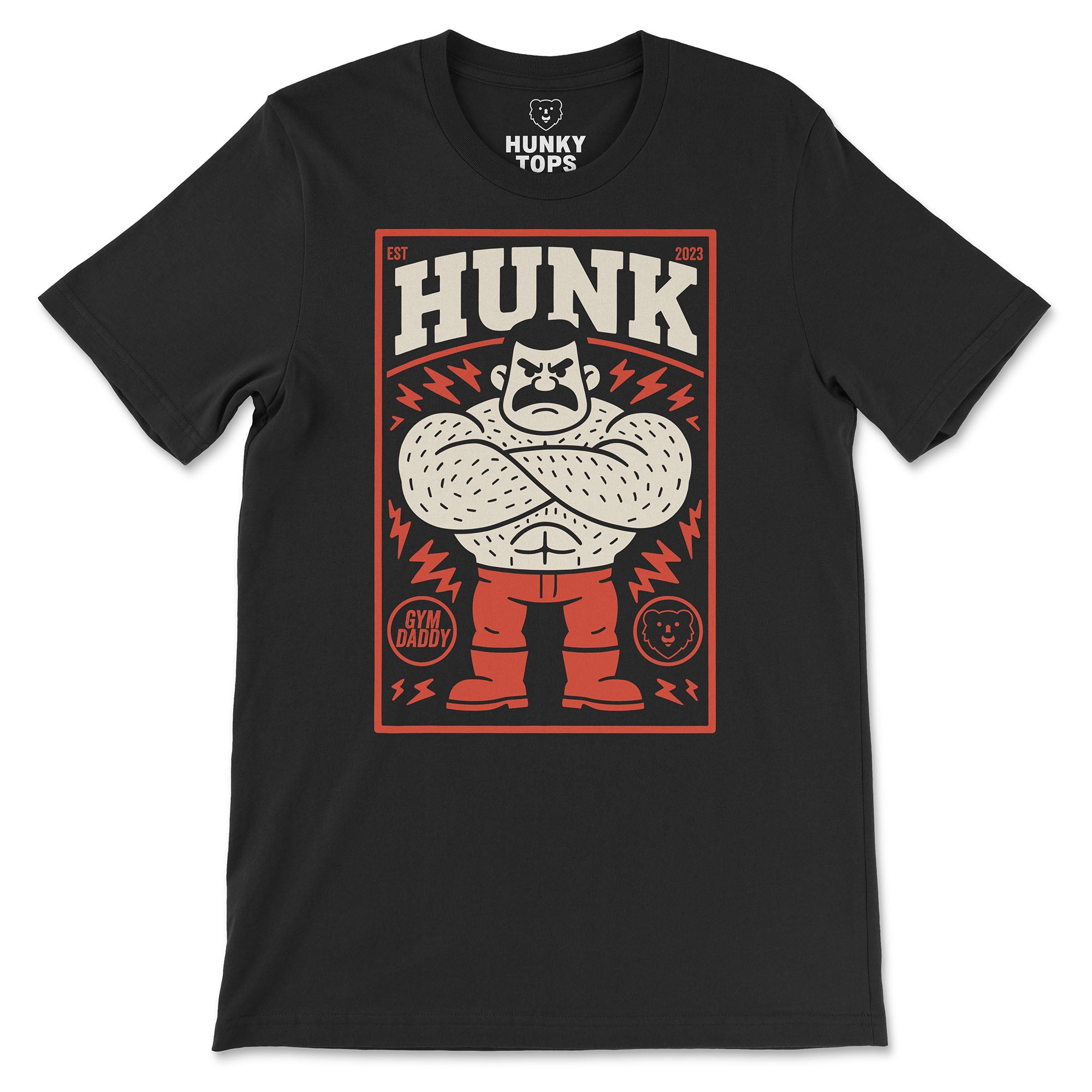
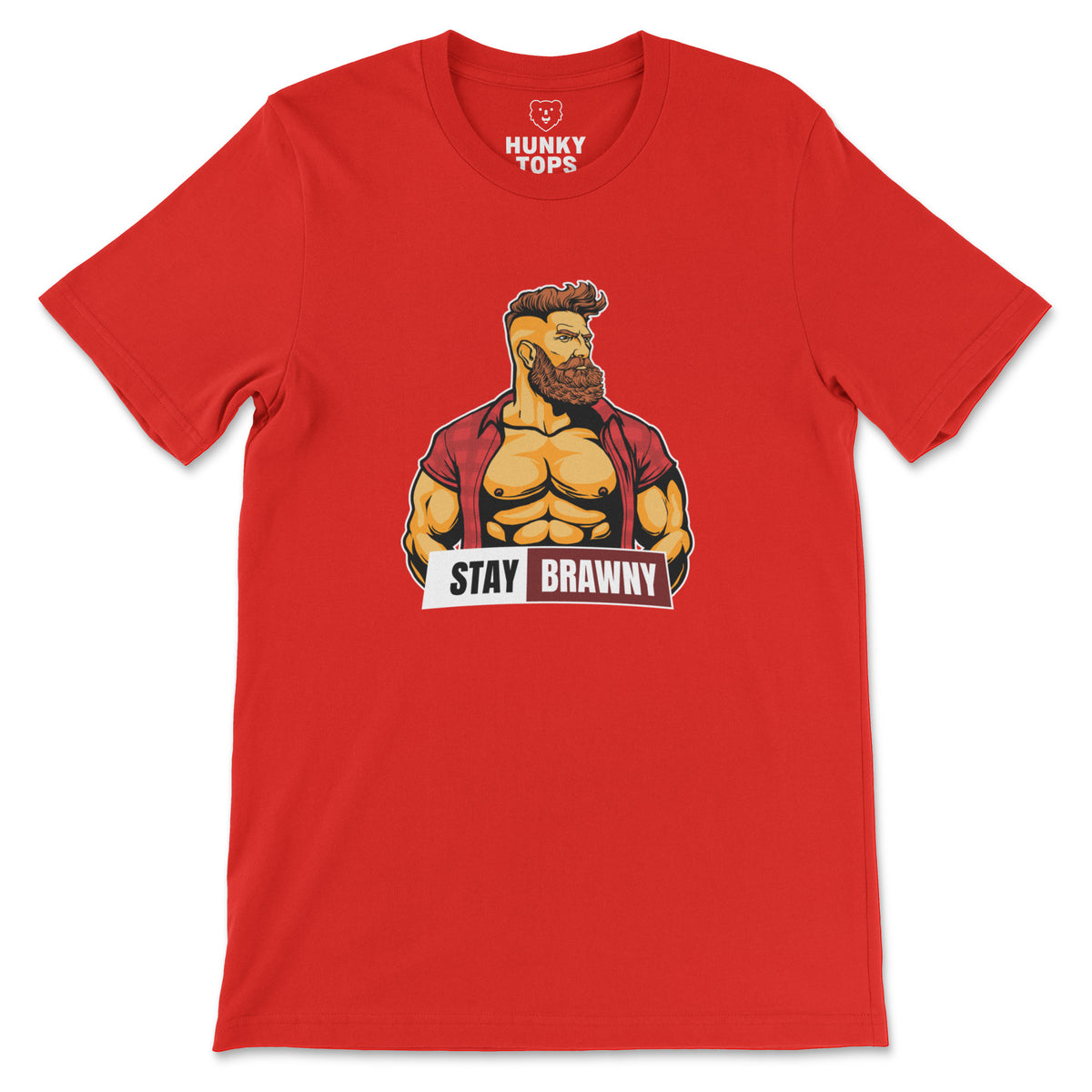
I make shirts that say something about who you are. That's the point of Hunky Tops. Wearing the signal means the people who need to find you can find you. But the shirt starts the conversation. The friendship has to be built on purpose, by two guys who decide it's worth the effort.
I want to hear from you. Do you have gay male friends? Did you build them on purpose, or did they just happen? Drop a comment below. I have a feeling this one's going to hit a nerve, and I'd rather have the conversation than just leave it hanging.
Stay Hunky.