


I knew Jim French before I knew Mapplethorpe.
For most people that's the wrong order. One of those names hangs in museums. The other ran a gay erotica studio under a fake name. But it's the honest order for me.
Late at night, one strip at a time
It was the mid-'90s in Chile, late at night on the family computer, and the dial-up connection took its sweet time. I was still discovering who I was, and the internet was the one place I could go looking without asking anybody for directions.
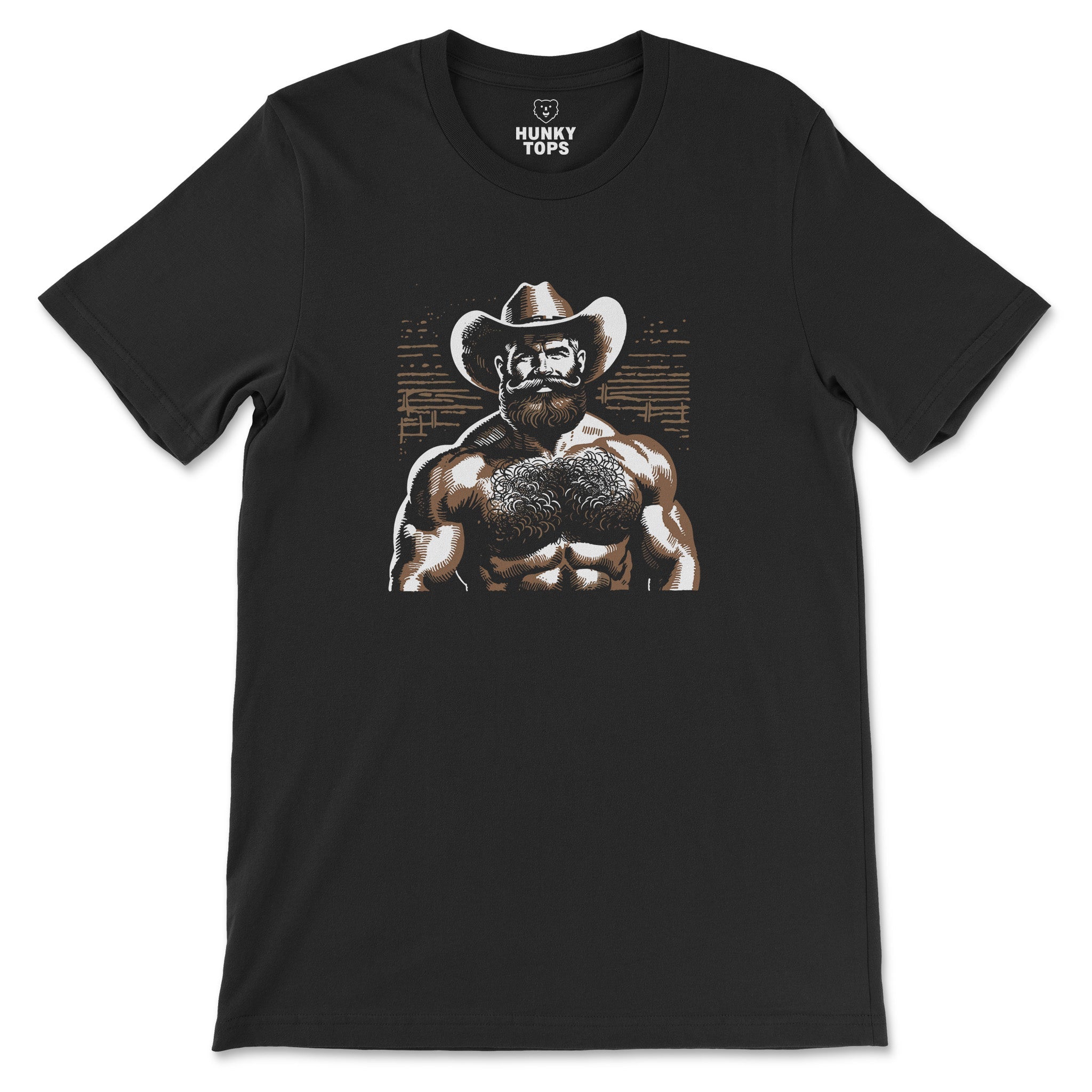
Featured product:
Every picture took minutes. They loaded section by section, top to bottom, and I sat there with one ear on the house, terrified someone would walk up behind me and see what was on the screen. You had a lot of time to think about what you were looking at while you waited for the rest of a man to arrive.
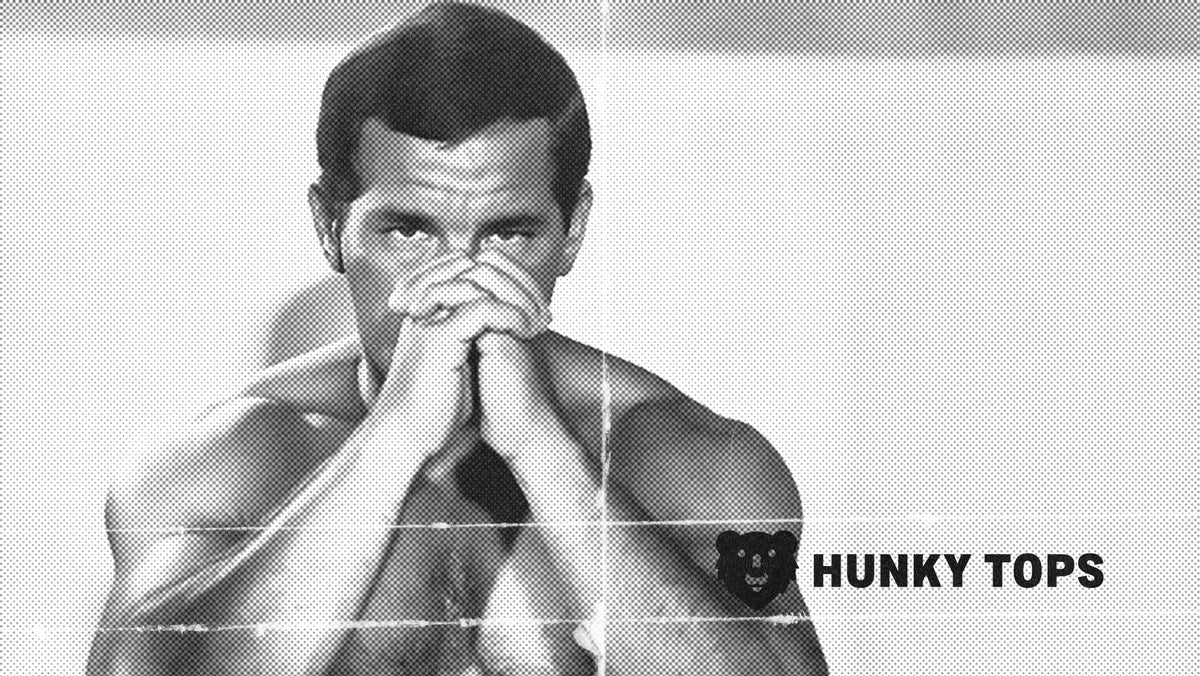
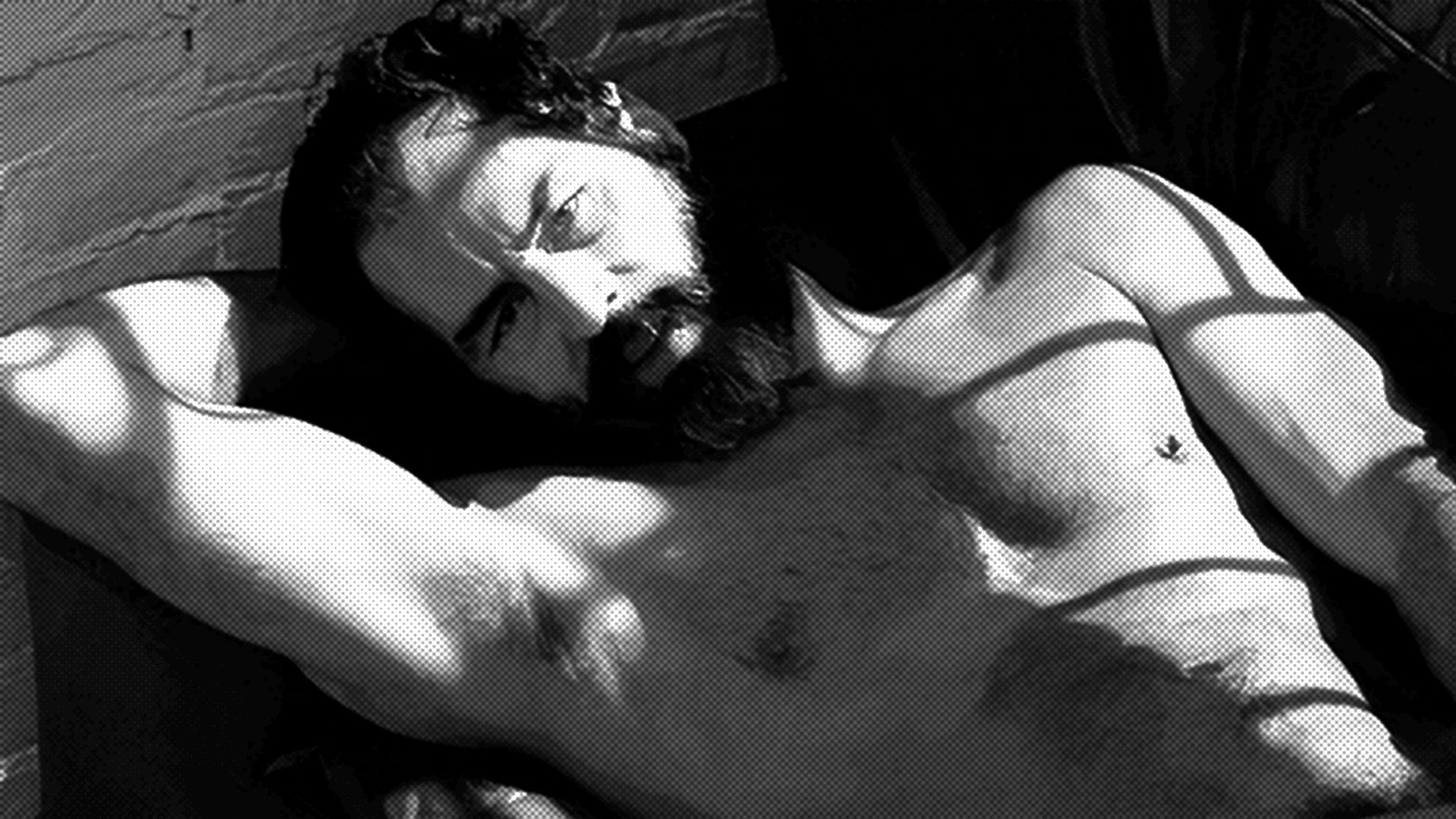
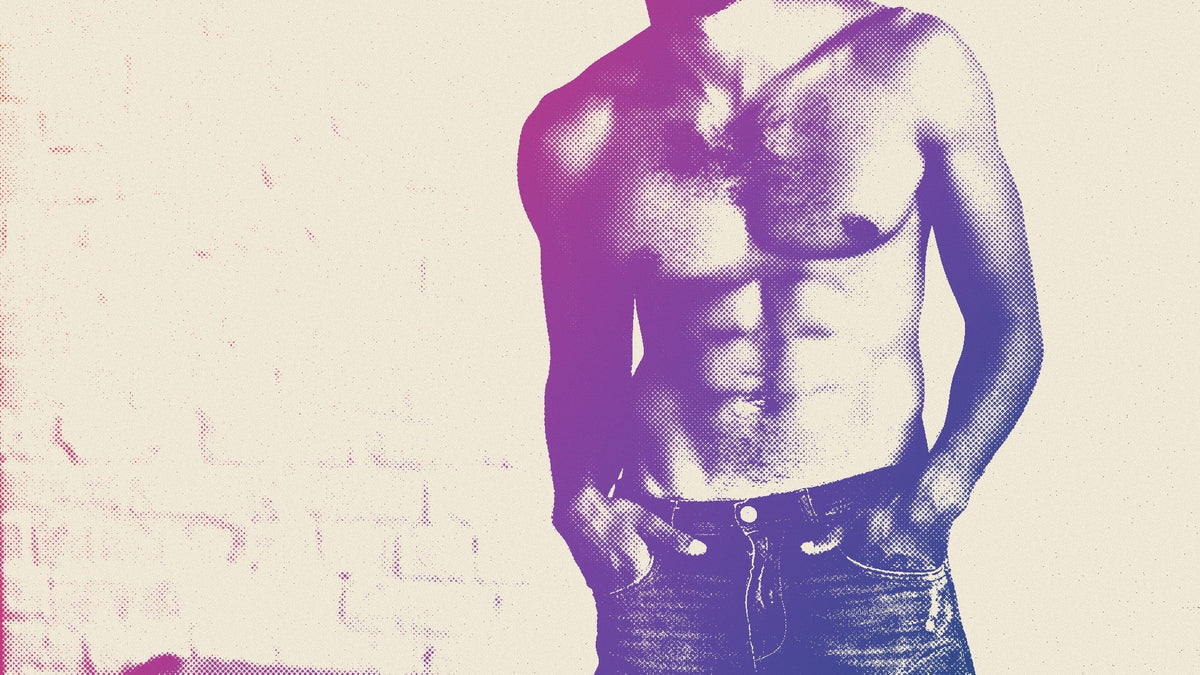
The pictures worth that wait were Jim French's. Hairy, muscular men who looked completely at home in their own bodies. They told me what I liked before I had the nerve to say it out loud, and from then on I kept an eye out for more of his work.
The first name I had for any of it was COLT. It sat on the photos as a watermark, and in the years before Google, a watermark was a gift. It gave me a word to type into a search box.
French had a line for exactly what those slow downloads were doing to me. In a 2004 interview, the first time he told his story to the public, he said: "I'm old-fashioned enough to believe that when you see it all, it's not as sexy as when you let your mind create what you want to be there." On dial-up, the mind had minutes to work. He built a whole studio on that idea.
So here's the man behind the watermark, and the long, strange trip his pictures took without him.
Before the camera
Jim French was born James Thomas French on July 14, 1932, in Beaver Falls, Pennsylvania. He studied at the Philadelphia Museum School of Art from 1950 to 1954, aiming for a career in fashion illustration along the lines of J.C. Leyendecker, the man who drew the Arrow Collar Man.
Then came the Army. He'd already done two years in the reserves, so he went in as a noncommissioned officer and ended up as the pianist for the officers' glee club. He said later that the service prepared him for COLT, because it forced him to deal with people far outside his own world.
After that he set up as a freelance illustrator with an office on Madison Avenue, drawing storyboards for agencies like BBDO and Young & Rubicam and fashion work for Neiman Marcus and Bergdorf. In his words, he "drew enough tubes of Crest toothpaste to last me a lifetime." He also made portrait drawings for Columbia Records album art, including Barbra Streisand, Frank Sinatra, Johnny Mathis and Maria Callas.
Sit with that for a second. The same hand that drew Streisand for a record sleeve went home at night and drew cowboys.
Three fake names
French started making homoerotic work on the side in the mid-'60s, under pseudonyms, because in those years a pseudonym was the only sane way to do it. He described the climate himself: "When I started Luger, frontal nudity was considered obscene. Early photographers such as Lon in New York were being prosecuted if their pictures showed a glimpse of pubic hair peeking over a posing strap."
The first name was Arion. According to the ONE Archives at USC, whose finding aid was written from French's own diaries, the Arion drawings were romantic homoerotic illustrations, first offered by mail in early 1966. There was exactly one mailing.
The second name was Kurt Lüger. In mid-1966 an old Army friend, Saul Stollman, who knew the Arion drawings, proposed starting a physique studio together. The Lüger drawings went hypermasculine, all cowboys and leathermen. The name was meant to evoke the German pistol, and the umlaut was pure decoration. "I thought the umlaut was interesting," French said, "and it just seemed to be a masculine icon." Bonus detail: Lüger is also German for "liar," which is a pretty perfect name for a pseudonym.
Stollman was a bad businessman. French hired a friend, Lou Thomas, on August 8, 1967 to look into the books. By October Thomas had walked away in frustration, and within a month French had agreed to let Stollman buy him out. On December 5, 1967, French and Thomas took out a business license for a new company: COLT Studio.
The third name was Rip Colt. COLT started as a pistol reference too, the American answer to the Luger, and French soured on it almost immediately. "I wasn't doing violent pictures," he said. The gun turned into a young stallion: "I really thought the Colt image was fresh, it was healthier, more positive." The "Rip" came from Rip Serby (also spelled Searby), a photographer who'd taken amateur pictures of a model French corresponded with. French never met him. He just liked the name, "because there aren't many people called Rip, even today."
What he was actually making
Read French in his own words and the first thing that jumps out is how much he saw himself as a craftsman. "I see my work as erotica, not porn," he said. "Frankly, pornography bores me, because 99.9 percent of it is lacking the one thing that makes it successful. And that is, it's not erotic!"
His method was construction. He started out shooting Polaroids of models as reference for his drawings, and one summer at his Fire Island house it hit him that in the time it took to finish one tight rendering, he could take a photograph and sell reproductions of it. That was the jump to photography. "Usually my work is a construction," he said. He turned down most of the men who wanted to pose for him, about 80 percent by his own count. And he paid every one who did: "I always, always paid my models. I think it's the height of conceit to think that somebody would work for me if I give them a print."
He also designed for the long haul, and as a guy who makes T-shirts for a living, this is the line I keep coming back to:
"Very few people I worked with in the '80s had long hair. I never photographed anybody who had lightning bolts on their shoes. Those things are part of their time."
He kept the decade out of the frame on purpose so the pictures wouldn't date. That's how a photo shot in the '70s could still stop a kid in Chile cold twenty years later.
Two stories about his men belong here because they're so specific. Pete Kuzak first: "From the first session I did with him until I got him to let the body hair grow took over two years." Two years of patience for a chest. If you've read my Hairy-Chested Hall of Fame, you know I respect the commitment.
Then John Pruitt, whom French called "the kind of person who elicits the sound of dropped flatware in a restaurant." French was humble about his own pictures of him: "I wish I had been a better photographer." The two became close enough that French was godfather to Pruitt's first son.
French was also the first photographer to shoot a man named Drew Okun, and he gave him the name he became famous under: Al Parker.
If you read my piece on Bob Mizer's secret code, you already know the mail-order physique world French came out of. He took that world and gave it a cleaner line and a lot more hair.
The honest part
French knew the COLT man was a fantasy, and he said so. "I've always felt that I worked in a fantasy world because the people in the drawings are polished to perfection," he said. "And in the photographs, with all due respect, they don't look like that walking around."
The Advocate's editors said the rest when they reprinted his interview after he died. The COLT ideal was intensely masculine, some would say unattainable. Some of his models identified as straight, and most were white. Their comeback was that you could say the same about Michelangelo's subjects. I think both things hold at once. The COLT man was a narrow ideal, and for a lot of us he was also the first picture we ever saw of a man like that being wanted.
Where the pictures went without him
The cowboys shirt
In 1969 French drew Longhorns Dance: two cowboys facing each other, naked from the waist down except for their boots. It first sold as part of a six-print pack, then turned up in COLT's magazine Manpower! in 1974. In early 1975, Malcolm McLaren picked up a copy on Christopher Street in New York. He added a bored little dialogue between the two cowboys and put the whole thing on a T-shirt for SEX, the King's Road shop he ran with Vivienne Westwood.
The first man to wear it in public, McLaren's friend Alan Jones, was arrested under the Vagrancy Act of 1824 for "showing an obscene print in a public place." Police raided SEX the next day and impounded the shirts. A Labour MP, Colin Phipps, wrote to the Home Secretary objecting to prosecutors leaning on "antique laws." Jones was fined, and McLaren was fined later. Then members of the Sex Pistols, Sid Vicious among them, wore it, and Jim French's cowboys became one of punk's defining provocations.
French's side saw it very differently. His archivist, Nat Gozzano, told the writer Paul Gorman that French was "decidedly unimpressed with modern cultural movements like punk." Gozzano was blunter about the shirt itself: "The whole drawing was simply jacked."
The museums have since sorted out the credit. The Met's Costume Institute owns a "Two Cowboys" T-shirt, bought in 2018, and its catalogue record lists Jim French as the artist, right beside Westwood and McLaren.
My favorite epilogue: after Gorman's 2011 post traced the drawing back to French, COLT put it on its own apparel. The COLT store still sells a "Dance" tee, and the product copy takes a little swipe at Westwood. More than forty years after he drew them, the cowboys came home.
The Smiths sleeve
In 1983 the Smiths released their debut single, "Hand in Glove," in a sleeve showing a nude man seen from behind. Morrissey took the image from Margaret Walters' 1978 book The Nude Male, which credits it to Jim French. The model was most likely the bodybuilder George O'Mara, one of French's men. The photographer is less certain. Smiths historian Simon Goddard says the book miscredited it and that it was most likely shot by Lou Thomas, French's COLT co-founder. Either way, it came straight out of the early COLT circle and landed on a Rough Trade single. Bassist Andy Rourke's father, shown the record, reportedly said, "that's a bloke's bum."
The clone
The mustache and the tight 501s of the Castro clone leaned hard on the archetypes French had been drawing and photographing since the '60s. I told the full story of that uniform in Castro Clones: The Look That Built a Movement, so I'll keep it short here: walk down Castro Street in 1978 and a lot of the men looked like they'd stepped out of a COLT photo set.
Gachimuchi
Then there's the strangest afterlife of all. Billy Herrington caught French's eye in Playgirl, and two years later he was posing for COLT calendars. On August 10, 2007, a clip from one of his films was uploaded to the Japanese video site Nico Nico Douga, and it turned him into a phenomenon. Fans called him Aniki, "older brother," and made at least 15,000 parody mashups. In 2022, four years after he died following a car crash near Palm Springs, a petition to replace Odesa's monument to Catherine II with a statue of him passed 25,000 signatures. President Zelenskyy actually responded to it.
French drew men to be looked at. He couldn't have guessed by whom.
After French
In 2003, after 36 years, French retired and sold COLT to John Rutherford, a former Falcon Studios president, and his partner Tom Settle. According to the lawsuit French later filed, the price was about $400,000 up front plus a promissory note for a little over $1.8 million. French said he was happy to go, because "sleaze and explicitness is in, and that's not my turf."
The new COLT had its moment. In February 2007, San Francisco mayor Gavin Newsom declared a Colt Studio Day for the company's 40th anniversary, celebrated with a gala at the War Memorial Building the night before the GAYVN Awards. Bill O'Reilly took it personally on air: "There is not another city in the country that has ever had a 'gay porn day.'" A Newsom ally went on his show to argue the mayor couldn't be responsible for every proclamation that went out under his name.
Behind the scenes, the money was going sideways. French sued in 2009 over missed payments, with about $1.2 million still owed. COLT's parent company eventually filed for Chapter 11 with $105,000 in assets against $2.9 million in liabilities, and French's company was its largest creditor at $1.49 million. The new owners told their side in court papers: they said they never received all the images they'd bought, and that the brand they acquired was, in their word, "dead." In January 2011 the two sides settled, with COLT agreeing to pay Jim French Studios $500,000 in 20 installments.
French moved to Palm Springs in 2013 and kept selling limited-edition prints from his archive. He died at home there on June 16, 2017, at 84. He was survived by his husband, Jeffery Turner.
Two legacies
Here's how it shook out: the art and the company went separate ways.
The art went to the museums. The ONE Archives at USC holds 2,308 COLT prints, open to researchers. A 2013 show at New York's Leslie-Lohman Museum hung French alongside Michelangelo and Mapplethorpe. And in 2025 the Getty's Queer Lens: A History of Photography included his Polaroid work, with pages from the personal albums he'd kept of his 1960s and '70s Polaroids.
So eventually the museums put French and Mapplethorpe on the same walls. I'd had them filed in that order since dial-up.
The company went quiet. Rutherford, who was living in London by then, said it plainly in a 2022 interview: "We aren't shooting as much as we used to anymore." He named the internet as the business's biggest challenge. French saw a version of that coming back in 2004, when he noted that men thinking about posing nude knew "it will probably show up somewhere. Like the internet." It certainly showed up on a family computer in Chile.
These days COLT mostly sells its own history. For the company's 60th anniversary, its calendars are billed as a Diamond Anniversary Collection, drawn from the vault. That's a quiet ending for one of the most successful gay erotica studios in America, and an honest one. The pictures outlived the business.
The man behind the watermark
French opened that 2004 interview by saying he didn't think what he had to say was all that important. "What I've had to say is seen in the images," he said. "I don't really think who's done them is interesting." His role model was Irving Penn, a photographer the public knew only through his pictures.
He got his wish, at least with me. I saw the watermark first. The man came later.
He also said, "If my work reaches a wider audience once I'm gone, I'm not going to care." I'd like to think the Getty would have earned at least a raised eyebrow.
And I'd love to tell him about the kid in Chile, up late, waiting minutes for one picture to load, terrified someone would walk in. His pictures got there. They did exactly what he built them to do.
Now you. Where did you first see a COLT man? A calendar on a friend's wall, or a scan that took five minutes to load? Tell me in the comments. I read every one.
Stay Hunky.
Frequently asked questions
Who founded COLT Studio? Jim French, an illustrator working under the name Rip Colt, founded COLT Studio in New York with his business partner Lou Thomas in December 1967. French ran it until he sold it in 2003.
Who drew the Sex Pistols cowboys T-shirt? The image comes from Jim French's 1969 drawing Longhorns Dance. Malcolm McLaren added the dialogue and sold it at SEX, his King's Road shop with Vivienne Westwood, in 1975. French's camp considered it stolen.
Is COLT Studio still in business? Yes, on a small scale. COLT Studio Group is owned by John Rutherford, who was living in London as of 2022, and it mostly sells its archive along with an annual run of calendars.
Where is Jim French's work held today? The ONE Archives at USC holds a collection of 2,308 COLT prints that's open to researchers, and his Polaroids were part of the Getty's Queer Lens exhibition in 2025.